Erection changes are common, especially during periods of stress, poor sleep, illness, heavy alcohol use, or relationship tension. However, repeated difficulty getting or keeping an erection, softer erections during sexual arousal, needing more stimulation, or losing firmness can be early signs of erectile dysfunction, historically referred to as impotence, and deserve attention without shame or alarm.
This guide will help you recognize the early signs of erectile dysfunction, understand when occasional difficulty becomes a pattern, and know when to seek professional support. ED can involve physical health, emotions, relationship concerns, medications, or lifestyle factors, and having morning erections doesn’t always rule it out, as explained in this guide to morning erections and ED. If erection problems occur mainly with a new partner or during high-pressure situations, performance anxiety may also be part of the pattern, as detailed in this resource on performance anxiety and ED. Start by identifying which changes are happening and how often.
Key Takeaways
- Recognizing early signs of erectile dysfunction often involves noticing gradual changes in firmness, reliability, or the amount of stimulation needed rather than a complete loss of erections.
- Occasional difficulty after poor sleep, stress, illness, or heavy alcohol use is common, but repeated patterns over several weeks deserve attention.
- Erection concerns and erectile dysfunction can stem from physical causes like cardiovascular health and diabetes, psychological factors such as performance anxiety, or a combination of both.
- Consulting a qualified clinician allows for a proper evaluation of your medical history, medications, and lifestyle changes to find the right treatment approach.
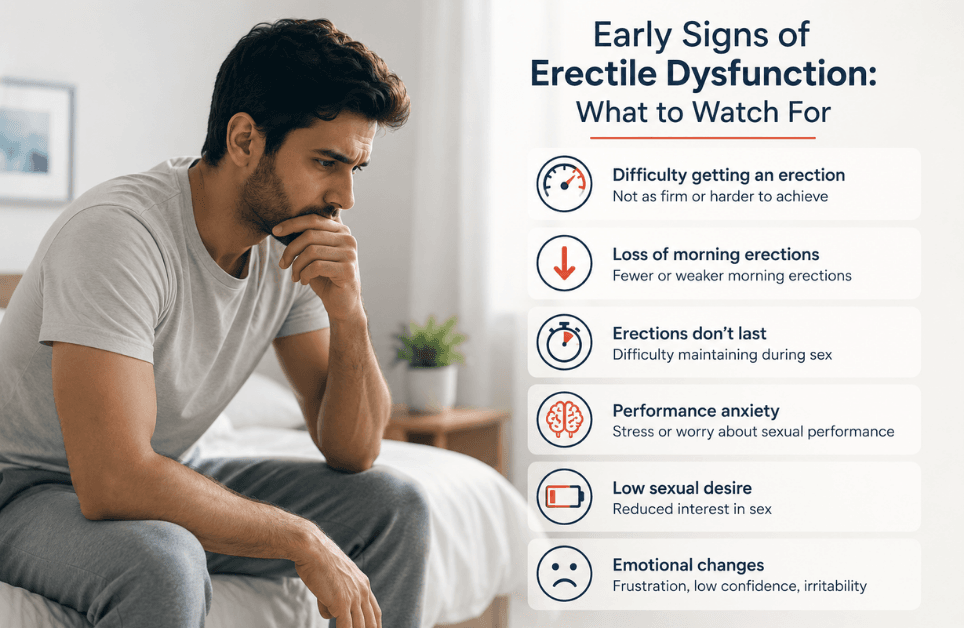
Signs of erectile dysfunction: what erection problems really look like
Erectile dysfunction means ongoing trouble getting or keeping an erection firm enough for satisfying sexual activity. It does not always mean a complete inability to get hard. The early signs of erectile dysfunction often appear as small changes in reliability, firmness, or the amount of stimulation you need, often tied to subtle shifts in blood flow.
One difficult sexual experience does not automatically mean you have ED. Stress, poor sleep, alcohol, illness, or pressure with a new partner can affect an erection temporarily. Concern grows when the same problem keeps returning and starts affecting intimacy or your confidence.
Difficulty getting or keeping an erection
Some men have trouble starting an erection. When erectile dysfunction begins to develop, achieving sufficient blood flow during sexual arousal can become less reliable. They may feel sexually interested but need much more touching, fantasy, or other stimulation than before. An erection might take longer to appear, or it may not develop enough for penetration or another preferred sexual activity.
Other men become erect but struggle to maintain firmness. For example, you may get hard during kissing or foreplay, then lose firmness when trying to have sex. You might also become erect again but repeatedly stop because the erection fades before sexual activity feels complete.
These changes can happen every time or only during certain encounters. If erections work during masturbation or in the morning but fade with a partner, anxiety or relationship pressure may contribute. That pattern still deserves attention, especially when it causes frustration or leads you to avoid sex. You can learn more about how performance pressure affects erections during first-time sexual encounters.
Erections that feel less firm than they used to
An erection can be present but noticeably softer than it was in the past. You may still become hard, yet the erection may not feel firm enough for comfortable penetration or your usual sexual activity. Some men describe it as an erection that is easier to disturb or harder to maintain when they change position, sometimes pointing to physical causes or reduced blood flow.
Often, this change develops gradually. You may notice it over several weeks or months rather than on one specific day. Pay attention if you need more stimulation, lose firmness sooner, or feel that sex has become less satisfying because the erection lacks its previous rigidity.
Hormonal conditions, such as low testosterone, can also affect erectile function. For example, Mayo Clinic’s information on prolactinoma lists erectile dysfunction and reduced sexual interest among possible symptoms. A repeated change is a reason to discuss the pattern with a qualified clinician, without assuming the cause or blaming yourself.
Early signs of erectile dysfunction you may notice first
Early erectile dysfunction often appears as a change in reliability rather than a complete inability to get an erection. You may need more time or stimulation, lose firmness during sex, or notice that erections do not last as long as they once did.
A single episode after poor sleep, heavy drinking, stress, or exhaustion usually doesn’t confirm ED. The more useful question is whether the same difficulty keeps returning across several weeks or situations. Mayo Clinic describes ongoing difficulty getting or keeping an erection as a key feature of ED, while occasional problems are common. You can review its overview of ED symptoms for additional medical context.
Changes in morning, spontaneous, or solo erections
Morning erections and spontaneous responses can provide useful context, but they don’t diagnose erectile dysfunction on their own. Some people with psychological factors or situational ED still get erections during sleep, on waking, or while masturbating. Physical causes can also vary, and noticing these early signs of erectile dysfunction helps distinguish physical concerns from mental health conditions or stress.
Instead of using morning erections as a pass-or-fail test, look at the full pattern. Ask yourself:
- Are erections less firm than they were before?
- Do they happen less often or disappear quickly?
- Do you need more stimulation during masturbation or partnered sex?
- Does the difficulty occur only with a partner, or in every setting?
Keeping brief notes can help you spot a pattern without repeatedly testing yourself. Record the situation, your sleep, alcohol use, stress level, and whether you could get or maintain an erection. Avoid checking firmness over and over, since monitoring can increase pressure and make arousal harder.
Morning erections can add information, but having them doesn’t automatically rule out erectile dysfunction.
Performance anxiety after a difficult sexual experience
One difficult sexual experience can create performance anxiety regarding the next one. You may start watching your erection, wondering whether it feels firm enough, or rushing sex before you lose it. That attention pulls you away from arousal and increases tension in your body.
The next difficulty can then strengthen the fear. You might avoid intimacy, delay sexual activity, or repeatedly check whether your erection is still present. These symptoms are real, even when performance anxiety plays a major role. They aren’t imaginary or a sign that you’re choosing the problem.
Fear of losing your erection during partnered sex, especially after a recent setback, can point to a developing cycle of erectile dysfunction. If the pattern continues, a clinician or qualified sex therapist can help identify whether anxiety, relationship pressure, medication, or a physical health issue is involved.
How ED symptoms can affect desire, confidence, and relationships
Erectile dysfunction can affect more than firmness. Repeated erection problems may change your desire, confidence, mood, and willingness to be intimate. The emotional effects can also make future erections less reliable, creating a cycle of worry and avoidance.
The psychological effects of ED can include embarrassment, frustration, low self-esteem, anxiety, and relationship tension. These effects deserve attention alongside physical symptoms.
When reduced desire is part of the picture
Some men with erectile dysfunction also notice reduced libido, meaning less interest in sex. However, erection firmness and sexual desire are separate concerns. You can want sex but struggle to get or keep an erection. You can also experience a reduced libido while your erections remain possible.
Stress, depression, relationship strain, hormone problems, and medication effects may reduce sexual desire, often driven by underlying psychological factors or mental health conditions. Repeated disappointment can also make sex feel associated with pressure rather than pleasure. You may begin avoiding sexual thoughts because they remind of a previous setback, and a persistent reduced libido can sometimes stem from these exact mental health conditions.
While conditions like premature ejaculation frequently co-occur with erectile dysfunction, each stems from distinct physical or psychological factors. Tell your clinician about every change, including reduced libido, erection loss, premature ejaculation, mood changes, and medication use. Treating only the erection symptom may leave an important cause unaddressed.
How erection concerns can change intimacy
Erection worries can shape your behavior before intimacy even begins. Fear of impotence and recurring performance anxiety might lead you to avoid sex, stop dating, hide the problem, or become tense when your partner initiates affection. Some men rush intercourse because they fear losing firmness, while others avoid penetration altogether.
Partners can misunderstand the change. They may assume they are unattractive, unwanted, or no longer loved. Meanwhile, you may feel ashamed or fear disappointing them, even when attraction and affection are still present.
Calm, blame-free communication can reduce that pressure. Explain what you are experiencing without making your partner responsible for fixing it. A simple statement, such as stating that you feel anxious about your erection while still feeling attracted, can prevent silence from filling in the gaps.
Situational erection loss, especially with a new partner or after one difficult experience, can involve performance anxiety. This explanation of erections during first-time sexual encounters may help you recognize that pattern. If avoidance or distress continues, confidential professional support can protect both intimacy and the relationship.
When erection problems may point to a health condition
Persistent erection changes can sometimes be an early clue to another health issue. High blood pressure, heart disease, diabetes, high cholesterol, and atherosclerosis may affect erections before other symptoms become obvious.
Physical warning signs to mention to a clinician
When you book an appointment, describe the erection changes and any other symptoms. Reduced blood flow often stems from physical causes related to cardiovascular health, which can also be influenced by high blood pressure, high cholesterol, and atherosclerosis. Reduced morning or spontaneous erections can add useful context, although they don’t identify the cause by themselves. Also mention pain, a new bend or curve in the penis, numbness, or changes in sensation.
Urinary symptoms matter too. Tell your clinician about a weak stream, frequent urination, urgency, burning, difficulty starting, or waking often to urinate. Fatigue, unexplained weight gain or loss, increased thirst, frequent infections, and slow-healing cuts may point toward diabetes, low testosterone, or another medical condition. Chest pressure with exertion, unusual breathlessness, leg swelling, or reduced exercise tolerance also deserve attention because restricted blood flow can affect erectile dysfunction alongside underlying heart disease.
Risk factors can provide additional context without proving a cause. Smoking, heavy alcohol use, obesity, poor sleep, and low physical activity may increase the likelihood of erection difficulties linked to high cholesterol, high blood pressure, and diabetes. Your clinician may also ask about blood pressure, cholesterol, blood sugar, mood, sleep quality, and sexual desire.
ED itself is usually not an emergency. However, seek immediate medical care for sudden chest pain, severe shortness of breath, fainting, sudden weakness, or another urgent symptom. Don’t wait for a routine sexual-health appointment when those signs appear.
Medicines, substances, and health habits that can affect erections
Some medicines for high blood pressure, depression, prostate conditions, pain, and other health problems may affect sexual function. Alcohol can reduce arousal and erection firmness, especially when you drink heavily. Nicotine can harm blood vessel function and worsen atherosclerosis, while recreational drugs may affect erections, desire, judgment, or hormone balance.
Bring a complete list of your prescriptions, over-the-counter medicines, and supplements to your appointment. Include how often you drink alcohol, use nicotine, or take recreational drugs. Never stop a prescription medicine on your own. Ask the prescriber whether the medicine, dose, or an underlying condition like diabetes could be contributing, and discuss how positive lifestyle changes might support your overall cardiovascular health, manage high blood pressure, and keep high cholesterol in check.
Avoid self-treating with online erection pills or unregulated supplements. Products sold without reliable medical oversight may contain undisclosed ingredients or interact with your existing medicines. A full evaluation is safer and more useful, particularly when erectile dysfunction continues, becomes more frequent, occurs across different situations, or appears with low libido and other health changes.
How doctors assess the signs of erectile dysfunction
A confidential evaluation for erectile dysfunction focuses on the full pattern, not one failed sexual experience. Your clinician will compare your symptoms across different settings and look for physical, emotional, medication-related, and relationship factors to understand the root cause.
What to track before an appointment
Brief notes can make your appointment more useful. Record when the changes started, how often they happen, and whether the erection is absent, softer than usual, or difficult to maintain. Keeping track of these details helps clinicians determine whether restricted blood flow or hormonal deficiencies such as low testosterone are present. Also note whether the issue occurs during masturbation, with a partner, or in every sexual setting.
Include details about:
- Morning or spontaneous erections
- Sleep quality and recent exhaustion
- Stress, anxiety, or relationship tension
- Alcohol, nicotine, or recreational drug use
- Sexual desire and changes in ejaculation
- Medicines, supplements, or recent dose changes
You don’t need to measure firmness or test yourself repeatedly. Constant checking can turn sex into a performance exam and increase pressure. A few honest observations are more helpful than daily monitoring.
During the visit, your clinician may ask when symptoms began, whether they are getting more frequent, and what happens during sleep, masturbation, foreplay, and partnered sex. They may also ask about mood, stress, relationship concerns, medical conditions, and previous treatments.
Physical, psychological, and mixed causes can overlap
Erectile dysfunction often has more than one cause. A physical change, such as reduced blood flow or a medication effect, may create worry. That worry can then make erections less reliable, especially during partnered sex.
Diagnostic assessments evaluate the overlap between physical causes, psychological factors, and broader mental health conditions. Psychogenic erectile dysfunction means emotional or relationship elements play a major role in erection difficulties. Anxiety, fear after a previous setback, learned sexual patterns, depression, and relationship conflict can all affect arousal. This doesn’t mean the symptoms are imaginary. The erection problem is real, even when the main driver is emotional.
A clinician may review your health history and medicines, check blood pressure and genital health, and order tests based on your symptoms. Blood tests may assess blood sugar, cholesterol, low testosterone, or other hormone and health concerns. The assessment may also include screening for depression or anxiety, as well as evaluating psychological factors that impact overall well-being.
Treatment depends on the pattern. Medical care may be combined with sex therapy, cognitive behavioural therapy, mindfulness, sensate focus, behavioral exercises, psychoeducation, or couples counseling. For anxiety-linked or learned patterns, psychogenic ED treatment options can provide a structured path toward more reliable, less pressured sexual experiences.
What to do when you recognize several ED symptoms
Recognizing several early signs of erectile dysfunction does not mean you need to panic. It means you have enough information to stop guessing and take a sensible next step. Repeated erection changes can have physical, psychological, medication-related, or relationship causes, and many are treatable through lifestyle changes.
When it is time to seek professional help
Book an appointment with a qualified doctor, urologist, or sexual health professional if erectile dysfunction problems keep returning, affect your confidence, create tension with your partner, or lead you to avoid intimacy. You should also seek care when impotence occurs with reduced libido, pain, urinary changes, unusual fatigue, numbness, or other health symptoms related to underlying issues like diabetes, high blood pressure, heart disease, high cholesterol, or low testosterone. Managing diabetes, high blood pressure, and high cholesterol effectively often relies on consistent lifestyle changes alongside medical advice.
A clinician can review your medical history, medications, sleep, alcohol use, mood, relationship concerns, and sexual pattern. Depending on your symptoms, they may check blood pressure and order selective tests for blood sugar, cholesterol, testosterone, or other conditions. The American Urological Association ED guideline supports a thorough medical, sexual, and psychosocial assessment.
Seeking help does not mean you are weak or that the problem is all in your head. Confidential support is available, and honest information usually makes treatment more accurate. If anxiety or relationship pressure contributes to your symptoms, sex therapy, psychological therapy, couples counseling, or a combination may help. Physical causes may require medical treatment such as oral phosphodiesterase type-5 inhibitors like sildenafil and tadalafil, or alternative options if those phosphodiesterase type-5 inhibitors are not suitable. Patients may also benefit from a second-line vacuum erection device, alprostadil injections, or another vacuum erection device option. In some cases, alprostadil or surgical solutions like penile implants are considered to restore healthy blood flow, and penile implants remain a reliable permanent choice for severe cases. Mixed causes often respond best to both lifestyle changes and medical approaches.
While arranging care, improve sleep, stay physically active, limit alcohol, and avoid smoking. Manage diabetes, high blood pressure, and high cholesterol with medical guidance to protect your overall cardiovascular health, and share your concerns with your partner rather than withdrawing. Avoid unverified erection pills bought online or supplements without professional advice. Seek emergency care for chest pain, severe shortness of breath, fainting, or sudden weakness. Erectile dysfunction itself is usually not an emergency, but those cardiovascular symptoms are.
Frequently Asked Questions
What are the earliest signs of erectile dysfunction?
Early signs of erectile dysfunction often include needing more stimulation to achieve an erection, erections that feel softer than usual, or difficulty maintaining firmness during sexual activity. These changes typically develop gradually over several weeks or months rather than happening all at once.
Can morning erections mean I don’t have erectile dysfunction?
Not necessarily. While morning erections provide helpful context, many individuals with psychological or situational erectile dysfunction still experience them regularly.
When should I see a doctor about erection problems?
You should consult a healthcare professional if repeated erection difficulties persist, affect your confidence, create tension in your relationship, or are accompanied by other symptoms like pain or urinary changes.
Can performance anxiety cause erectile dysfunction?
Yes, performance anxiety can create a cycle of worry, causing you to constantly monitor your erection and leading to further difficulties during intimacy.
Conclusion
Recognizing early signs of erectile dysfunction empowers men to seek timely care for sexual health issues, including erectile dysfunction and impotence. The early signs of erectile dysfunction often appear as gradual changes rather than a complete loss of erections. Trouble getting hard, losing firmness during sex, weaker erections, reduced reliability, reduced libido, or growing distress around intimacy can all indicate that something needs attention. Occasional difficulty is common after stress, poor sleep, illness, or alcohol use. However, repeated or worsening symptoms deserve a proper evaluation.
Your erection pattern can reflect physical health, medication effects, anxiety, relationship pressure, or a combination of factors. Morning or solo erections may provide context, but they don’t rule out impotence or identify its cause.
Solutions range from frontline treatments like sildenafil to options like tadalafil, alprostadil, a vacuum erection device, or penile implants, paired with meaningful lifestyle changes and management of underlying health conditions like high blood pressure, diabetes, heart disease, and high cholesterol. Additional therapies such as sildenafil, along with penile implants and positive lifestyle changes, can help address persistent issues related to high blood pressure, diabetes, and heart disease.
Don’t self-diagnose or hide the problem. Speak with a qualified professional who can assess the full pattern, identify the root cause, and create a private treatment plan that fits your needs. Getting help early can reduce worry and make it easier to restore confidence and satisfying intimacy.